2015年9月22日星期二

The wide spread uses and diverse application of Steel pipes


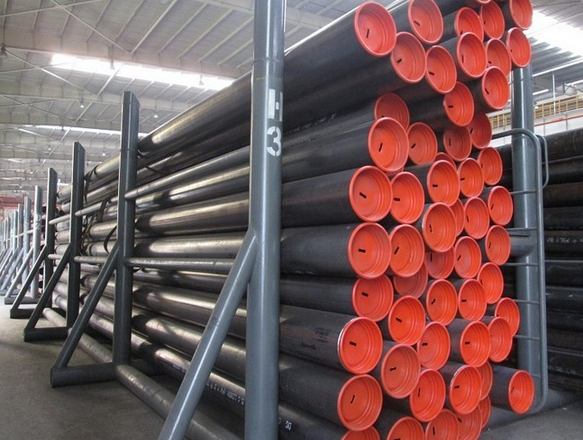
Steel as we all know is the most important factor of any industry. Whether it is construction company or a firm producing electrical equipment, without stainless pipes and tubes, the industry cannot thrive. The quality of the steel pipes is instrumental in enhancing the nature of construction and any product which is produced in the factory. Steel pipes find applications in most of the equipment and the machineries that are used in most of the manufacturing and construction industry. The quality of the steel which are used in making these pipes utilise the most advance technology and good quality raw materials so that the end products are of great quality.

Quality of the stainless steel pipes and its importance

There are many factors which need to be considered when it comes to ensuring the quality of the steel pipes. Steel comes in many variants and slight changes in the composition of the steel renders a different quality of the steel. For instance, duplex steel is a variant of steel which has special qualities and is less heavy than steel. Steel pipes quality is an important factor, especially in the construction industry, which largely relies on the steel reinforcement. It is therefore important that the steel that is used in this industry must be of high quality and is manufactured using the most advance technology and best quality raw materials. The users who buy steel pipes must be cautious about the quality of the steel and must procure it from the manufacturers of good repute. There are many trusted steel pipe manufacturers in the country who deal in good quality steel pipes and cater to the requirements of all types of customers. There are many new variants of steel which have been produced in recent times. Some of these steel has added properties which make them even stronger than the steel. The steel pipes made of this material are lighter in weight and less expensive than normal steel. Their degree of tolerance of heat, pressure and other adverse effects of weather. The features of this type of steel pipes are more strength, resistance to stress corrosion, lower and more stable price in the market as compared to the steel. Hence, if you are interested in buying steel pipes and tubes, make sure that you are choosing the one with the guarantee of the best quality which comes with years of expertise and ability to innovate the process of steel pipe manufacturing.

Specifications
1 . API ERW steel pipe
2.  API PSL1 /PSL2
3.  Outer diameter : 21.3-610mm
4.  wall thickness : 1.8-22mm
ERW Steel Pipes

2015年9月21日星期一

Preventing Frozen Pipes and Burst Lines


Ice formation can occur any place within a length of pipe. Experts say that what causes potential bursting problems is that after the ice blockage, the pipe continues to freeze and expand and cause the downstream water pressure between the ice blockage and the closed faucet to increase.

When and where are your Pipes at Risk?

How vulnerable your pipes are to freezing depends on where they are located in your home.

In northern climates, pipes are located inside insulated walls to prevent freezing in cold weather, but if there are holes in the building or the temperatures are extremely cold, pipes are still at risk.
In southern climates, pipes are located outside and may freeze once or twice a year in cold temperatures.
Pipes located in attics,  crawlspaces, and outside walls are more subject to freezing.
Even small breaks in the wall, such as where TV or telephone lines enter the home, can provide enough of an entryway for cold air to gain access to pipes.
For pipes that have no insulation, frozen pipes are a threat when the outside temperature falls below 32°F.

How can you Prevent Frozen Pipes?

What can you do to prevent freezing? Plumbers offer several suggestions, with the caveat that pipes may still freeze even if you take precautions.

Install insulation and electric heat tape on the pipes prior to winter. Even if the pipes freeze in extreme temperatures, the heat will gradually thaw the pipe.
Seal gaps around the home around dryer vents, windows, cable entry points, etc.
When the temperatures are expected to dip, leave a small trickle of hot and cold water running to relieve pressure. If the dripping stops, still keep the faucets open.
Keep your house warm.
What to do if your Pipes Freeze

If pipes do freeze, it is important to thaw them out and prevent bursting. Make sure that your faucets are open and try these remedies:

Shut off the water supply to the whole house or at least in the section of the home near the frozen pipe.
Wrap the pipe in burlap or towels and pour hot water over the fabric several times until the pipe thaws.
Direct a heat lamp, hairdryer, or space heater toward the frozen area and move. Make sure to plug the appliance into a Ground Fault Circuit Interrupter (GFCI) outlet and aim it toward the pipe from at least a foot away.
When to Call a Licensed Plumber

When your pipes freeze, you can call a plumber to unthaw them, but this is a more costly solution. While a plumber will come out and do the job, your dollars are best spent on engaging a professional plumber before cold weather sets in to insulate your pipes, check for places where cold air can come in, and install heat tape. In some cases, he or she may even relocate the pipes to reduce freezing chances.

If your pipes burst, you will need a plumber to repair damaged lines, but the best cure for frozen pipes and burst lines is prevention.

Various steel pipe external coating projects are currently implemented by our company including single-layer/ double layer FEB, 2PE, 3PE, 3PP and other anti-corrosion coatings with the performed standards such as DIN 30670, DIN 30671, DIN 30678, CAN/CSA-Z245.21-M92, SY-/T4013-2002,SY/T0315-97 etc.
Anti-corrosion Pipes

2015年9月18日星期五

Firetube Boilers and Watertube Boilers


Firetube Boilers: Firetube boilers are also know as shell boilers. These boilers are the most commonly used boilers in the market. In the firetube or shell boilers the water is surrounded by the water. The water which surrounds the shell or firetube is heated by sending the hot gases or fire which is produced by the burner through the shell or firetube. The hot gases or fires are allowed four times through the tubes in the boiler before letting the out of the boilers. These tubes are generally set at the banks of the boilers. The firetube boiler systems can release up to 25,000lbs or 750hp of steam per hour. About 80% of the boilers that are in use today belong to this particular category.

Watertube Boilers: In the Watertube Boilers the tubes are arranged vertically in the shell. Then the water is filled in the shell which is heated by sending the hot fuel or hot gases through the tubes. Generally Watertube boilers are built in rectangular shape with two or three drums. The drums are arranged at the top and bottom, where top drum is used to separate water and steam and the bottom drum is used to collect he sludge. Watertube boilers are usually utilized when more than 750hp of steam per hour is required.

The temperature generally rises up to 212 degree Fahrenheit when the fuels or hot gases released into the boiler from the burner which heats up the water. At this temperature the water converted to the steam. The steam generated is then circulated throughout the building or home using radiators, vents and pipes, specifically created for heat transferring.

To overcome the problems like overheat of the boilers, some of the heat is retained in the boiler to keeping the building or home warm needs. Since more steam is produced as the temperature increases, it is essential to check the boiler and ensure that excess pressure is not built. To check the pressure build up, run your boiler for short durations of time. Furthermore, they have to be maintained regularly to keep them in optimum working condition.

1. Standard
ASME SA-106, ASME SA-192M, ASME SA-209M, ASME SA-210M, ASME SA-213M, ASME SA-335M, ASME SA-179M
ASTM A 106M, ASTM A 192M, ASTM A 210M, ASTM A 213M
EN 10216-2
DIN 17175
JIS G3456, JIS G3461, GIS G 3462
2.Uses
For manufacture waill panel, economizer, reheater superheater and steam pipeline of boilers
3.Available Dimension Range:
Cold Finished Seamless Tube and Pipe: 8~114.3*1~20mm
Hot-rolled Steel Tube and Pipe: 114.3~720*5~120mm
Boiler Tube

2015年9月17日星期四

Roughneck Jobs - What They Are, And What They Pay


Roughnecks made it to fame when the film Armageddon came out starring Bruce Willis and Ben Afleck. Basically the story is about how a handful of skilled oil and gas workers save the world from a falling asteroid. Roughnecks is a generic term for someone who works in the oil industry. There are different kinds of jobs in the industry and these are referred to as roughneck jobs.

Definitely the first question that pops into the mind is how much do roughnecks and oil workers make in a year in terms of salaries? As with any industry there are different levels of salaries depending on job function and the like. Different levels of difficulty will have different corresponding salary adjustments and pay scales. We can discuss the oil industry jobs and see the different kinds of jobs and earnings they have.

The least paid in the oil industry are galley hands and cooks. Cooks have the function of making sure everyone is fed on the many shifts that rotate in a day. They make around 35,000 to 42,000 dollars per year. The trainees, or galley hands as they are called, do a lot of general jobs and assisting workers. They too get around the same salary as the cook at 35,000 to 42,000 dollars per year.

More specialized than the galley hands are the roustabouts, who make around 45,000 dollars per year. They are in charge of assembling and repairing oil field equipment using power and hand tools. They also do other tasks as needed.

Earning 55,000 dollars a year, roughnecks are the ones who mostly operate drilling equipment with the drillers. They have a whole lot of other functions too when required, like driving a truck of heavy equipment for example. Roughnecks also serve long shifts on the field.

The second most important person in the drill crew is the derrickman who literally hangs out at the top of the derrick servicing the drill pipes and works closely with the driller. He makes around 62,000 dollars a year. The one in charge of the entire drill crew is the driller who makes sure working conditions are optimal and safe. The driller takes home around 85,000 dollars a year and is one of the most important people on the field.

The onsite supervisor of the location or an oil contractor supervisor is called the toolpusher. Mainly an administrative job that makes sure that logistic requirements are all met. The job nets around 115,000 dollars a year. Its his job to make sure that if something is needed by say the drill team, then it is his job to get whatever they have requested.

The one who is almost in complete control of the field and all its operations is the supervisor. Its his job to make sure production quotas are met and that everything flows smoothly from extraction to delivery. This hard job gives the supervisor around 200,000 to 300,000 per year. A lot of other jobs also exist in the oil industry, but judging from the numbers they should also be well paying.

Standard and technical conditions for supply
API SPEC 5DP
Uses:
For well drilling
Note:
1.EU-External Upset IEU-Internal-External Upset IU-Internal Upset
2.Threads of tool joins are left-hand or right-hand
3.Threads are cooper-plated or phosphated
Grade:
E75, X95, G105, S135
The wear-resistant belt of tool joint:
Arnco 100XT, 200XT, 300XT, 400XT
Internal Coating:
TK34, DPC, TC2000, TC3000
Drill Pipes

2015年9月16日星期三

Working principle of a Boiler


Every household in the United Kingdom has a central heating boiler in their houses. But anyone of you has ever thought how does a central heating boiler work. Today I am going to explain how exactly the central heating system (boiler) works.

The water stored in the vessel when heated to a desired temperature level by burning natural gases, coal and wood pellets can be defined as a boiler. The steam produced by the boiler when heated is piped to a spot which can be is utilized for different purposes such has running the production units, sanitizing some area, sterilizing equipments, to warm up the surroundings, to heat up the water, and many more.

Burner is a heart of the boiler which converters water to steam. This burner is heated by supplying fuels into it. Generally the steam needed to heat your houses, buildings, hospital, office and other places where heat is required is created by the fuel that is burned and supplied to the boiler from the burner. The burner can be heated by using different fuels like natural gas, coal or wood pellets. If you’re using natural gases, then the natural gases are released into the burner through a special pipe which heats the burners. If you’re using any oil to heat the burner the then the oil is supplied to them which pressurizes and heats the burners. When it comes to wood pellets, the woods are burned using some fuel which helps to heat the burners.

After the burners are heated up using the required fuels, then the gases or the fire from the burners are directly released on the boiler to heat up the water. The water can be boiled in the boiler depending on the two types of boilers used in the market.

There are generally two types of boilers which use their own principles to produce heat.

1. Standard
ASME SA-106, ASME SA-192M, ASME SA-209M, ASME SA-210M, ASME SA-213M, ASME SA-335M, ASME SA-179M
ASTM A 106M, ASTM A 192M, ASTM A 210M, ASTM A 213M
EN 10216-2
DIN 17175
JIS G3456, JIS G3461, GIS G 3462
2.Uses
For manufacture waill panel, economizer, reheater superheater and steam pipeline of boilers
3.Available Dimension Range:
Cold Finished Seamless Tube and Pipe: 8~114.3*1~20mm
Hot-rolled Steel Tube and Pipe: 114.3~720*5~120mm

Boiler Tube

2015年9月15日星期二

ERW Steel Pipes


Specifications

1 . API ERW steel pipe
2.  API PSL1 /PSL2
3.  Outer diameter : 21.3-610mm
4.  wall thickness : 1.8-22mm

Steel Grade:
BS:1387, EN10217:S185, S235,S235JR, S235 G2H, S275, S275JR, S355JRH, S355J2H, St12, St13, St14, St33, St37, St44, ST52
ASTM A 53: Gr. A, Gr B, Gr C, Gr.D
API 5L: A, B, X42, X46, X52, X56, X60, X65 X70
GB/T9711: L175, L210, L245, L290, L320, L360, L290, L320, L360, L390, L415, L450, L485, L555
GB/T3091, SY/T5037, SY/T 5040,CJ/T 3022:Q195, Q215, Q235, Q275, Q295, Q345, 08F, 08, 08AL, 08F, 10F, 10, HG5, DF08 SPHC, M8
ERW Steel Pipes

2015年9月14日星期一

Seamless Steel Pipe


Seamless Pipe (API 5L /ASTM A106 )
Steel Grade :GRB, X42, X52, X56, X60, X70
Size : 1/2"-32"

Product Description
1. Commodity Name: Carbon Seamless steel pipe
2. Standard: API,GB,ASTM,ASME,DIN
3. Quality grade:  10#, 20#, A106B, A53B, API 5L B, Q235, Q345, ST37-2, ST 45, ST52.etc.
4. Dimension:
OD: 1/2"-32"
WT: 2.5-52mm, SCH10~SCH40~XXL
length: 5.8m,6m,12m,SRL,DRL
5. Technique: Hot Rolled/Cold Rolled/ Cold Drawn
6. application
carbon seamless steel pipes are widely used in gas, water and oil, transpotation;constructions;Bridge,highway,windows of model steel door; building materials;fences;heating facilities Fluid Pipe;conduit pipe,scaffolding pipe.etc.
Seamless Steel Pipe